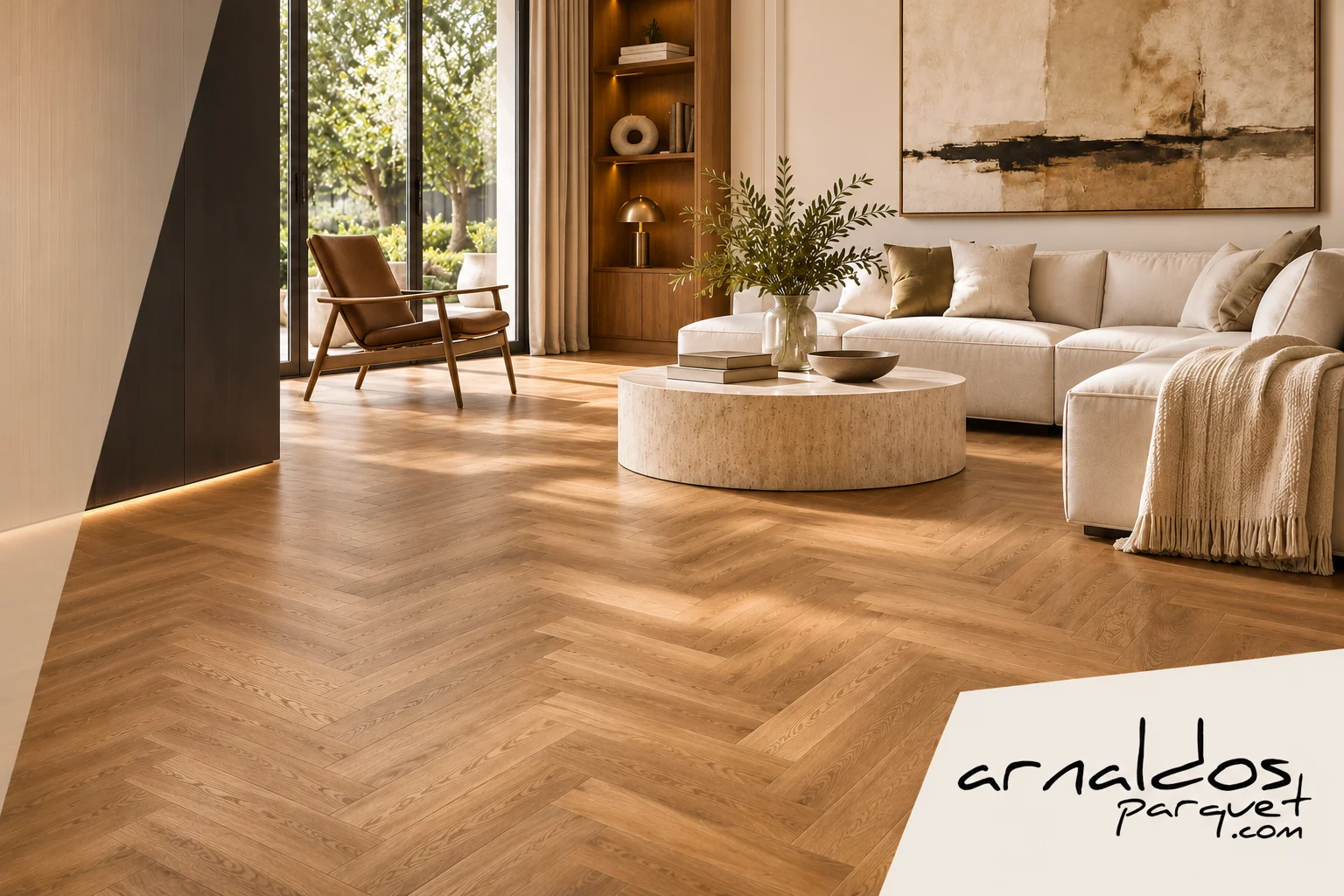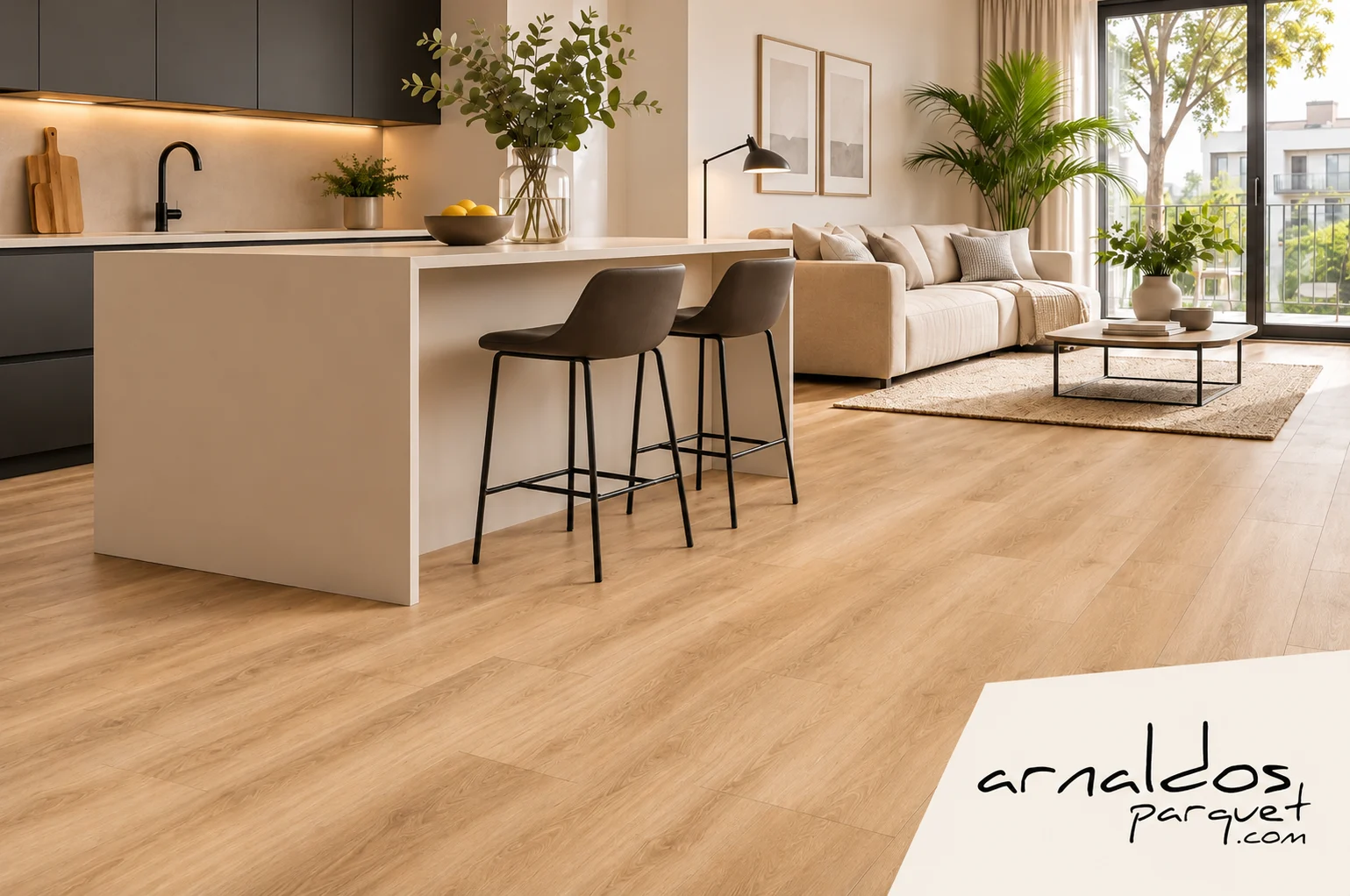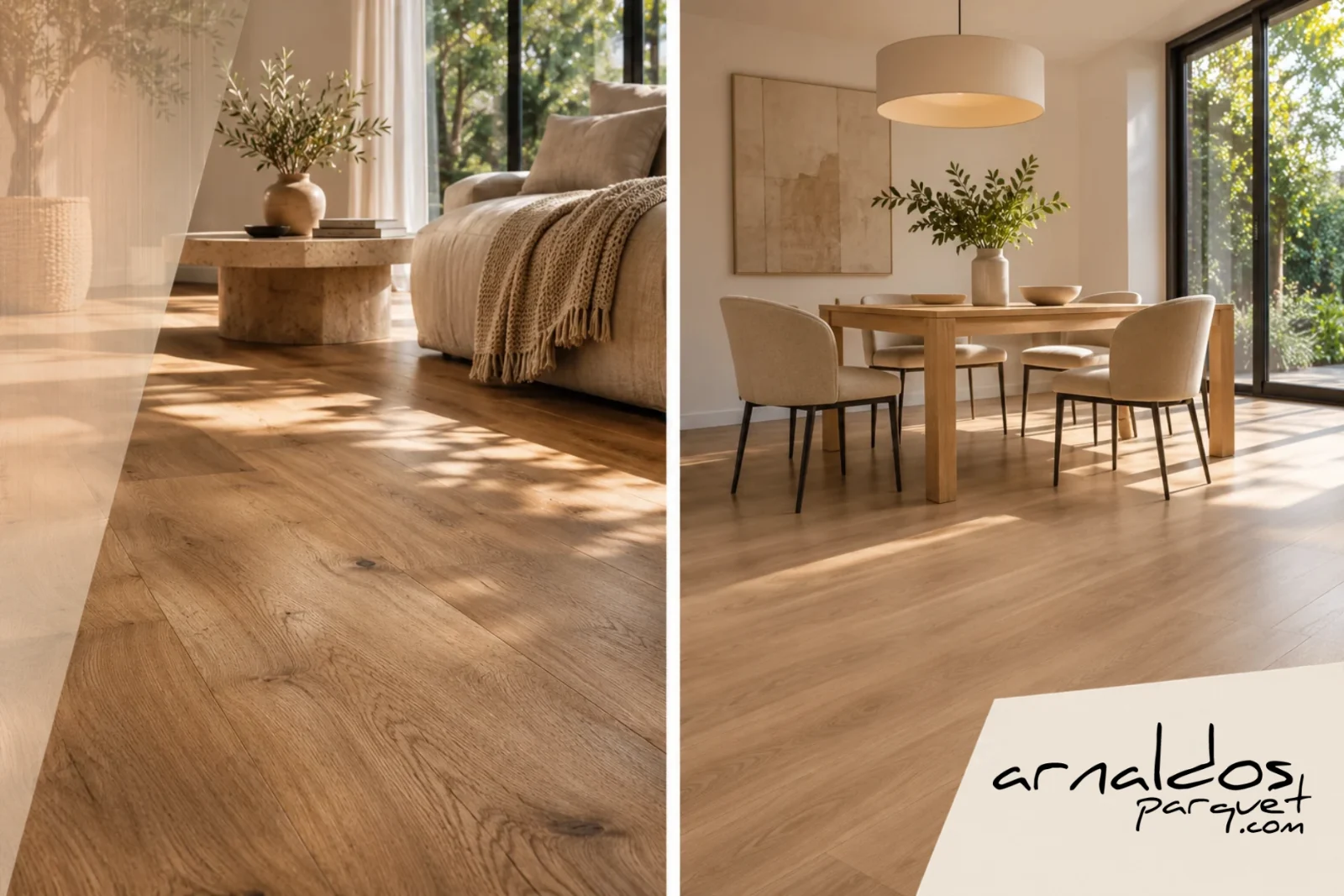
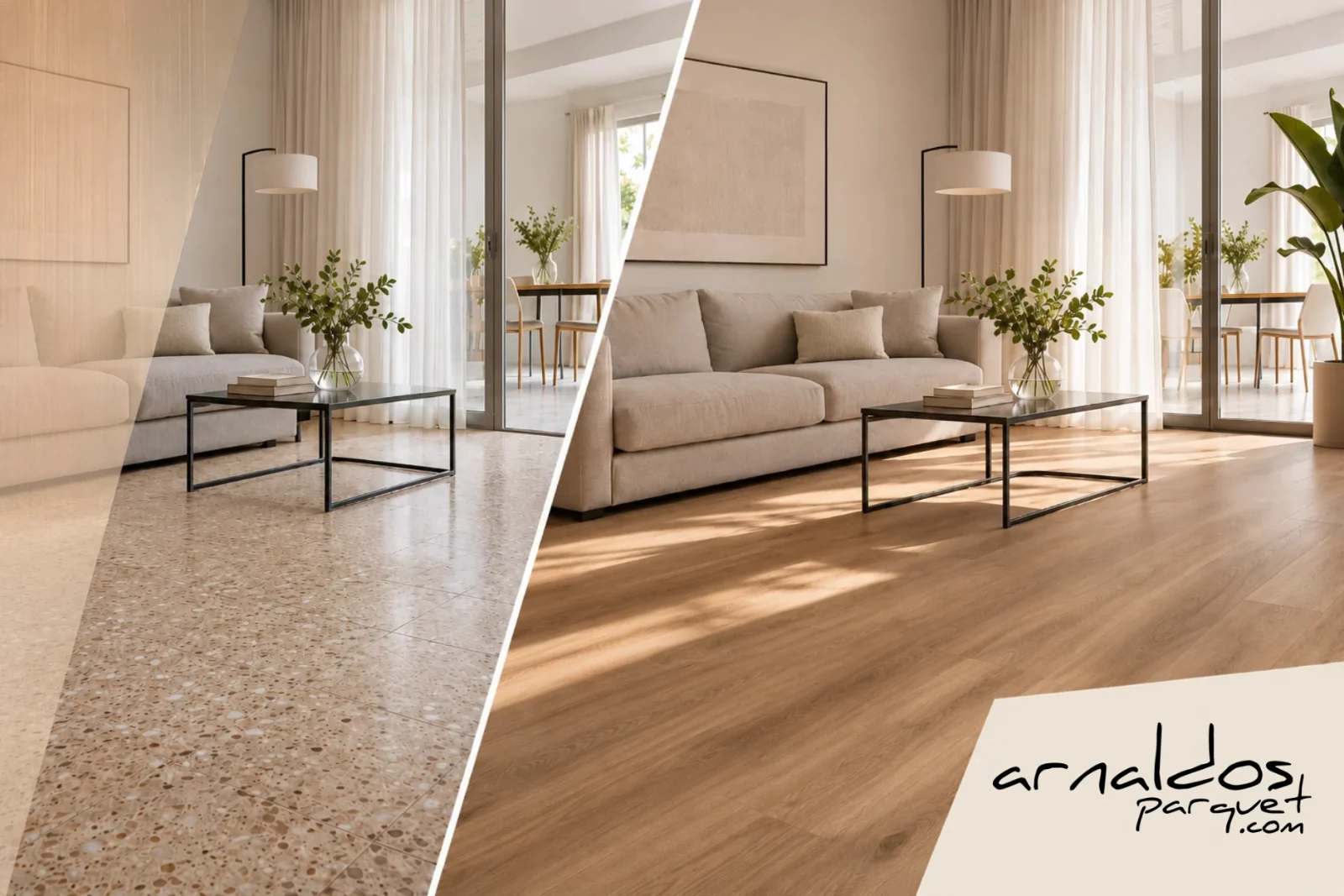
A flooring before and after comparison can reveal a dramatic change in a room without altering its layout or replacing its furniture. Floor colour, plank dimensions, texture and continuity all affect how we perceive light, proportions and atmosphere. Choosing new flooring is therefore more than a practical renovation decision: it is an important part of interior design.
Why flooring makes such a difference to a room
Imagine two photographs of the same living room. The walls, windows and furniture are unchanged, but the original floor has been replaced. Even with the same decoration, the room may feel brighter, calmer, warmer or more contemporary.
Flooring covers a substantial visible area of most interiors. It creates a visual foundation that influences how furnishings, walls and architectural features relate to one another.
Light floors can create a softer visual background, particularly when paired with pale walls. Darker finishes can introduce contrast and depth, while natural mid-tones often provide a balanced foundation for different materials and furniture styles.
These effects are not universal. Room proportions, natural daylight and surrounding colours must always be considered together.
Four details that shape a flooring before and after transformation
1. Colour and natural light
Colour is often the most noticeable difference after changing a floor. Pale finishes generally reflect more visible light than dark alternatives, helping to create a lighter overall impression.
Dark flooring can make an interior feel grounded and intimate, especially when combined with lighter walls and carefully considered lighting.
The best way to evaluate a finish is to examine physical samples in the actual room at different times of day. A colour that appears neutral in a showroom may look noticeably warmer or cooler at home.
2. Plank dimensions and laying direction
Plank format influences how the eye moves across a room. Long boards can encourage a continuous visual reading, while smaller formats and patterned layouts introduce more noticeable rhythm.
The laying direction should be considered alongside the shape of the room, daylight and movement between adjoining spaces.
Technical installation requirements must also influence the decision. The most attractive arrangement is not necessarily the most suitable one for every product or subfloor.
3. Texture and surface finish
Two floors with similar colours can look and feel very different. A matt surface tends to produce less pronounced reflections than a satin finish, while textured designs introduce additional visual and tactile detail.
Wood grain, knots and brushed effects can contribute character to a room, but visual appearance should not be confused with technical performance.
Durability, cleaning requirements and suitability for the intended use should always be checked against the specifications of the chosen flooring.
4. Continuity between spaces
Using the same flooring across several rooms can create stronger visual continuity. The transition from a living room to a hallway, for example, may feel less fragmented when colours and materials remain consistent.
However, installation limits, movement joints and transitions between different surfaces must follow the manufacturer's requirements.
Good design should balance visual continuity with reliable technical performance.
Which flooring material is best for your transformation?
A successful flooring renovation requires more than choosing an attractive finish. The material should suit the room's purpose, its environmental conditions and the way it will be used.
Natural wood parquet
Real wood offers natural variations in grain, tone and texture. It is particularly appealing when material authenticity is an important part of the interior design.
Whether a wood floor can be refinished depends on its construction and available wear layer. These characteristics should be examined before choosing between solid and engineered products.
Laminate flooring
Laminate flooring offers a broad range of decorative finishes and plank formats. Different products have different performance classifications, making it important to select a floor appropriate for the expected level of use.
It can be a practical alternative for homeowners looking for a wood-inspired appearance while managing their renovation budget.
Vinyl flooring
Vinyl flooring is available in a variety of decorative designs and installation systems. Depending on the product, it may suit interiors with specific cleaning or occasional moisture-exposure requirements.
Water resistance, subfloor compatibility and installation conditions must be checked for each particular product rather than assumed for the entire category.
The Arnaldos Parquet flooring store provides a starting point for exploring different finishes and product characteristics.
Can you replace flooring without a complete renovation?
In some circumstances, replacing a floor does not require renovating the entire room. Certain flooring systems can be installed over suitable existing surfaces, potentially reducing the amount of demolition work.
However, this approach is not appropriate for every floor. The existing substrate must be checked for stability, moisture, flatness and compatibility with the proposed installation.
Door clearances, skirting boards, floor height changes and transitions to kitchens or bathrooms also require attention.
If underfloor heating is present, the selected product and installation system must be compatible with the heating arrangement.
Careful preparation is essential. A visually impressive result is of little value if the underlying floor has not been properly assessed.
How to compare flooring before and after photographs
To understand the real effect of a new floor, photographs should ideally be taken from the same position, using similar lighting conditions and camera framing.
Keeping furniture arrangements consistent helps separate the influence of the flooring from changes caused by decoration.
Look at how the new surface interacts with wall colours, how it affects the perceived proportions of the room and whether it creates continuity with neighbouring spaces.
For additional guidance on the visual effects of floor colour and design, see Tarkett's advice on wood flooring designs and colours.
A successful transformation starts with the right floor
The most successful flooring before and after result is not always the most dramatic one. Sometimes a subtle change of tone, texture or plank format is enough to create a more coherent interior.
The goal is to balance visual appearance, everyday practicality, technical suitability and installation quality.
At Arnaldos Parquet, we provide flooring solutions for residential and commercial spaces, drawing on our experience in product selection and installation.
Considering a flooring renovation? Contact Arnaldos Parquet to explore suitable materials and finishes for your space.
Frequently asked questions about changing flooring
How much can new flooring change the appearance of a room?
New flooring can significantly alter the perceived brightness, proportions and atmosphere of a room. The effect depends on its colour, texture, plank format and relationship with walls, furniture and lighting.
Does lighter flooring make a room look bigger?
Light flooring can contribute to a more spacious appearance, especially when combined with pale walls and good daylight. However, furniture placement, contrasts and room proportions also influence the result.
Can new flooring be installed over an existing floor?
Some flooring systems allow installation over a suitable existing surface. The subfloor must meet the manufacturer's requirements for stability, flatness, moisture and overall compatibility.
Is wood parquet or laminate better for a room renovation?
The choice depends on budget, expected use, maintenance requirements and appearance. Wood parquet offers a genuine wood surface, while laminate provides a wide range of decorative designs and product specifications.