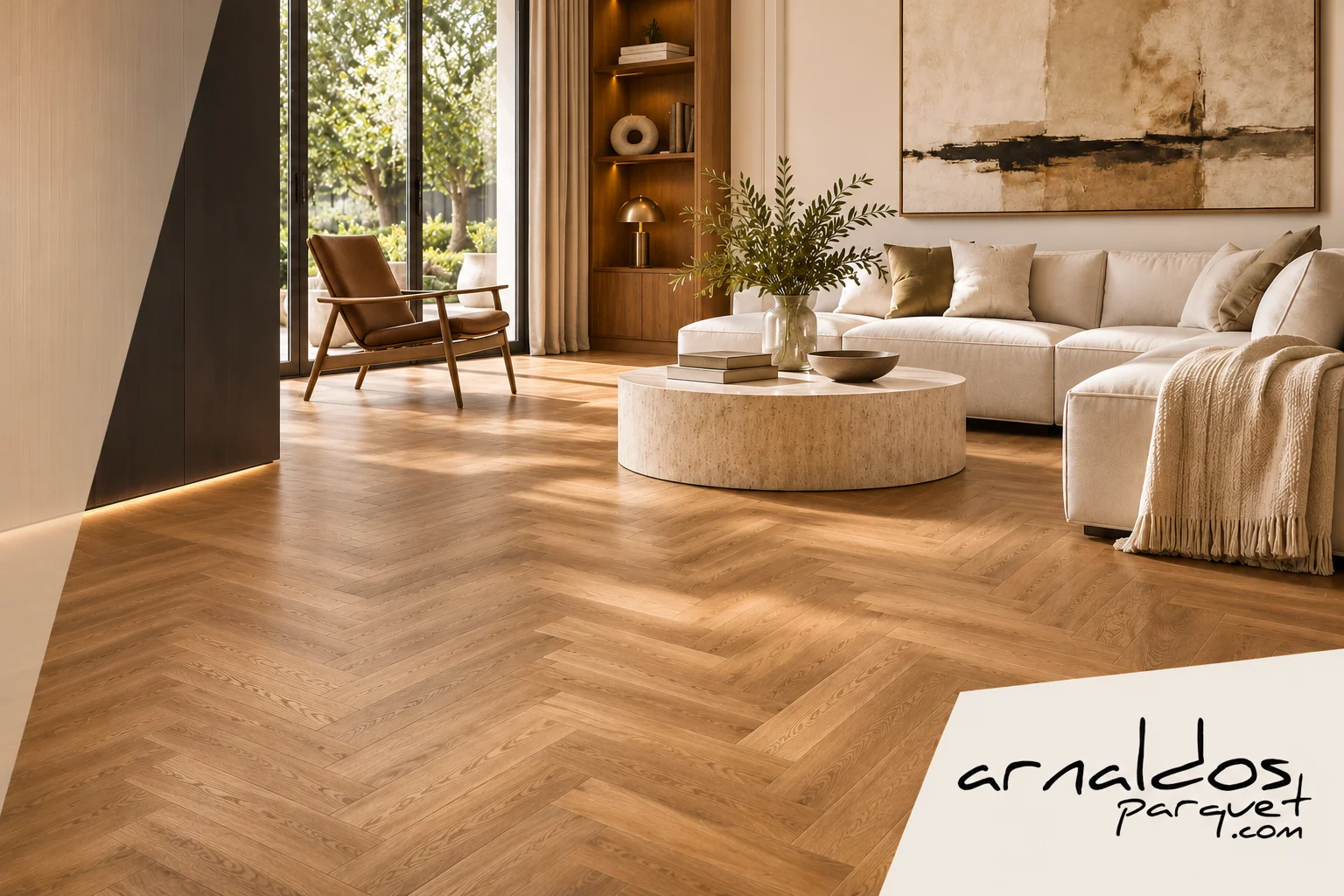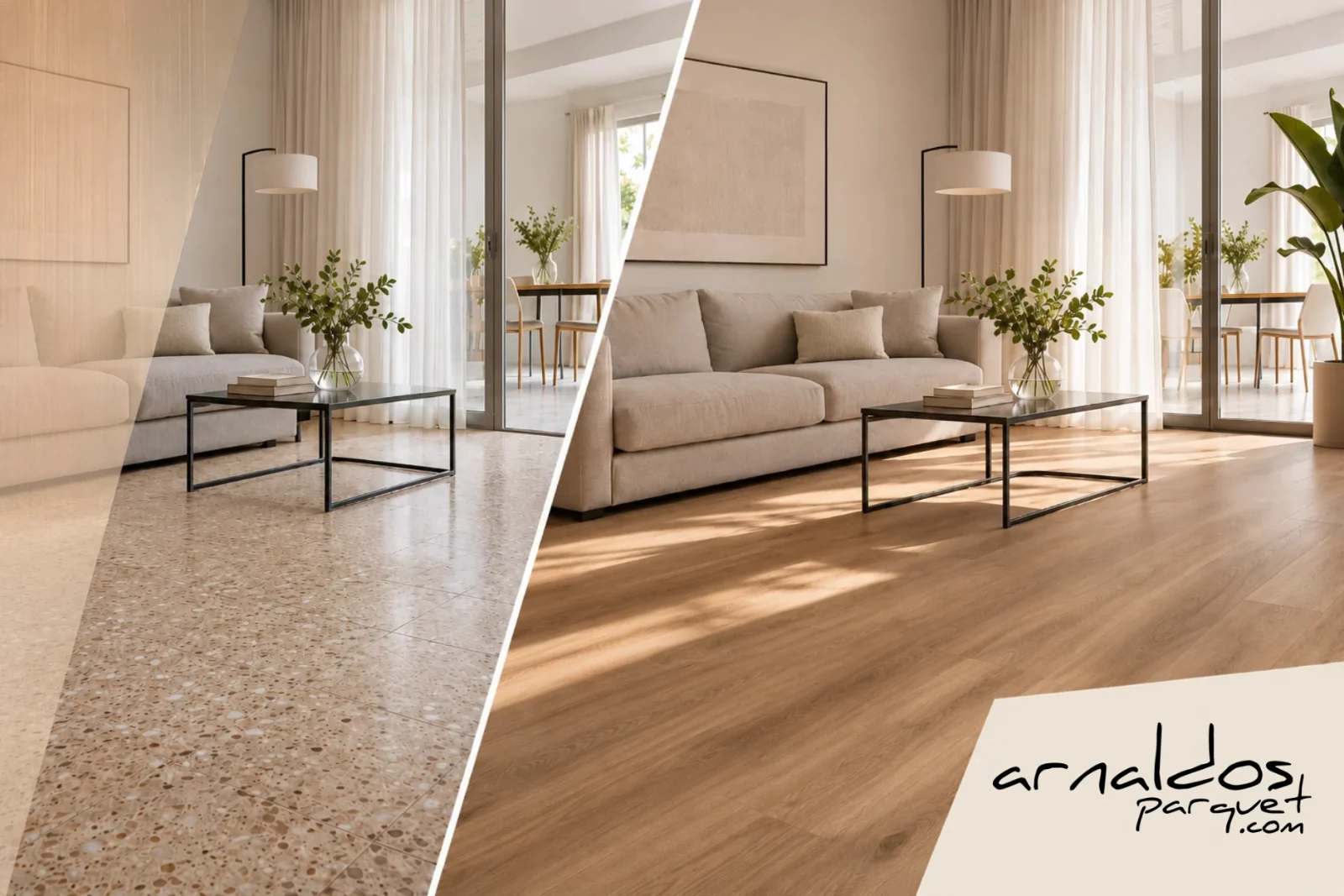
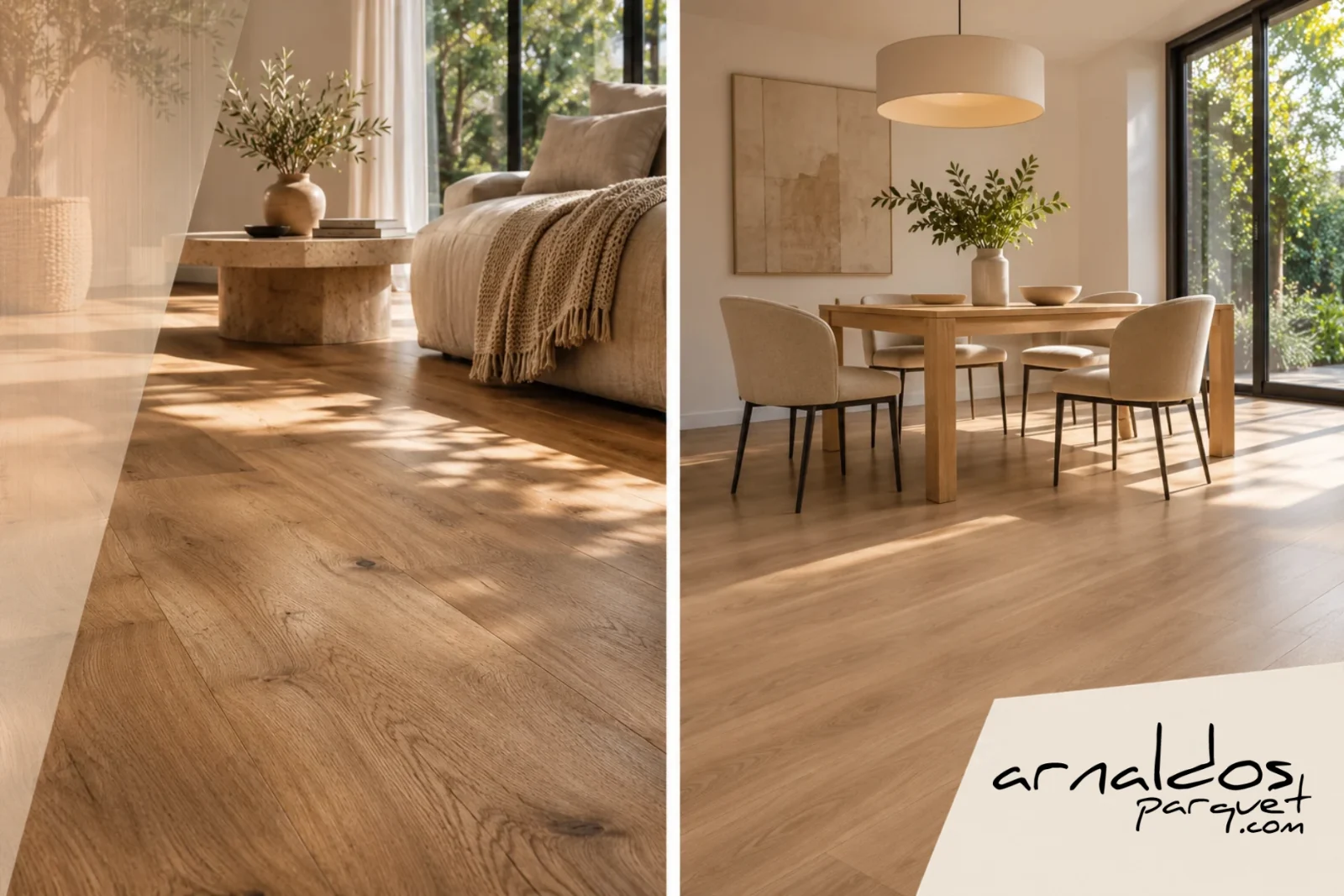
The main difference between natural parquet and laminate is the surface underfoot. Parquet has a real wood surface, while laminate has a decorative design protected by a wear layer. Two oak finishes can look alike in a photograph, so compare how the samples feel, how each finish handles daily wear, and what you could do about a deep scratch.
Look at the edge of the plank first
Solid parquet is wood throughout. Engineered parquet also has real wood on the visible face, bonded to supporting layers underneath. A conventional wood-fibre laminate gets its oak or walnut appearance from a decorative design beneath a transparent protective layer. Looking at the edge and reading the product specification will tell you more about the build than the finish name.
Lay several planks together and look at them in light coming from the side. Real wood varies naturally in tone and grain. A textured laminate can follow the printed grain closely, and a larger sample gives you a chance to see how often the design repeats. That matters more across a room than it does on a single sample in a display rack.
What you feel and hear underfoot
Wood texture depends on the species and finish. Brushed wood can have a pronounced grain, while a smoother finish feels quite different. Laminate gets its texture from the decorative face. If you want a matt look or grain you can feel, compare the actual finishes you’re considering in daylight and run your hand across each sample.
Sound also depends on installation. A floating floor can sound different from a glued-down floor. Subfloor flatness and the choice of underlay, when one is used, also affect the result. Holding two loose planks in a showroom helps you judge texture, but it tells you little about how the finished floor will sound in your own home.
What happens after the first serious mark?
Laminate’s wear layer protects the design against everyday abrasion. An AC rating helps compare abrasion resistance. If you’re concerned about impact, deep scratches or spills, check those properties separately in the product documentation. On parquet, a light mark in the finish and a dent in the wood call for different repairs.
A wood floor that can be sanded may take a new finish. On engineered parquet, the usable thickness of the wood layer and the condition of the floor determine whether sanding is an option. Sanding laminate would damage its decorative surface. A damaged plank can sometimes be replaced, so keeping a few spares from the same batch can help you match the colour and joint profile later.
What to check before accepting a quote
If spills are a concern, check what type of water exposure the manufacturer allows, for how long and under which installation conditions. Surface protection, the performance of the joints and moisture coming up from the subfloor are separate issues. For underfloor heating, confirm compatibility for the complete installation, including any required underlay.
Ask for quotes covering the same floor area and the same work. Check whether each includes subfloor preparation, skirting boards, transition profiles, any necessary door adjustments and labour. That gives you a comparable installed cost. Use the same criteria when looking through natural wood flooring options and laminate flooring options, alongside the finish you prefer and the maintenance you’re willing to take on.
If you’ve narrowed your choice down to two floors, bring the product references, room measurements and a photo to the Arnaldos Parquet showroom. You can compare the faces and edges of the samples and discuss what your installation would involve.
FREQUENTLY ASKED QUESTIONSHow can I tell parquet and laminate apart?
Check the plank edge and the specification. Engineered parquet has a real wood top layer. A conventional laminate has a much thinner decorative surface over a fibreboard core.
Can all engineered parquet be sanded?
It depends on the usable thickness of the wood layer, the floor’s condition and how it was installed. If the floor is already in place, have the remaining wood layer assessed before budgeting for sanding.
Are floating floors and laminate the same thing?
Floating describes a method of installation where the flooring is laid without being fixed directly to the subfloor. Laminate is a type of flooring. Some engineered parquet can also be installed as a floating floor.
Can water-resistant laminate go in any kitchen?
Check whether the manufacturer approves it for kitchens, requires perimeter sealing and specifies what water exposure is covered. A splash you wipe up straight away poses a different risk from a leak under the units.