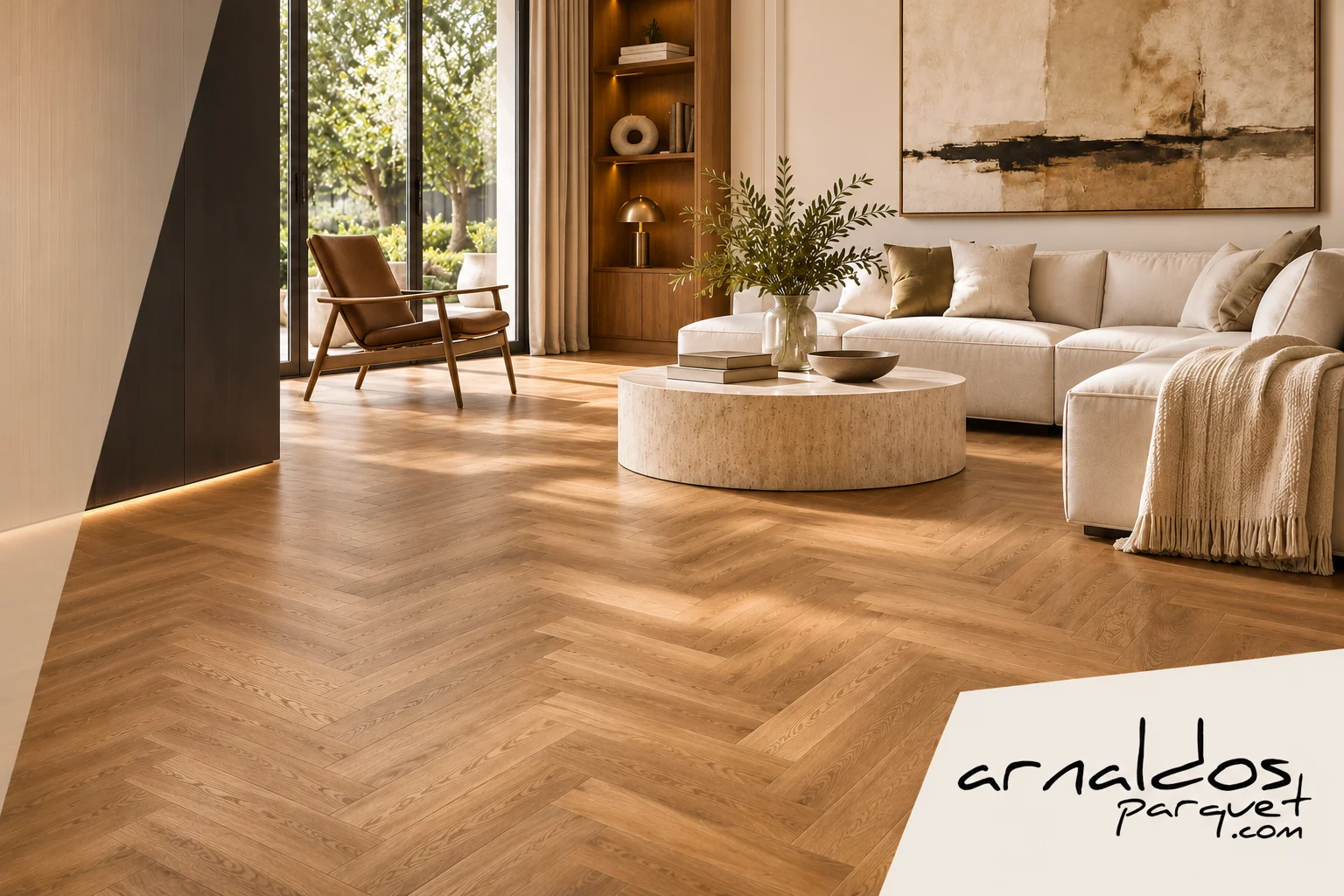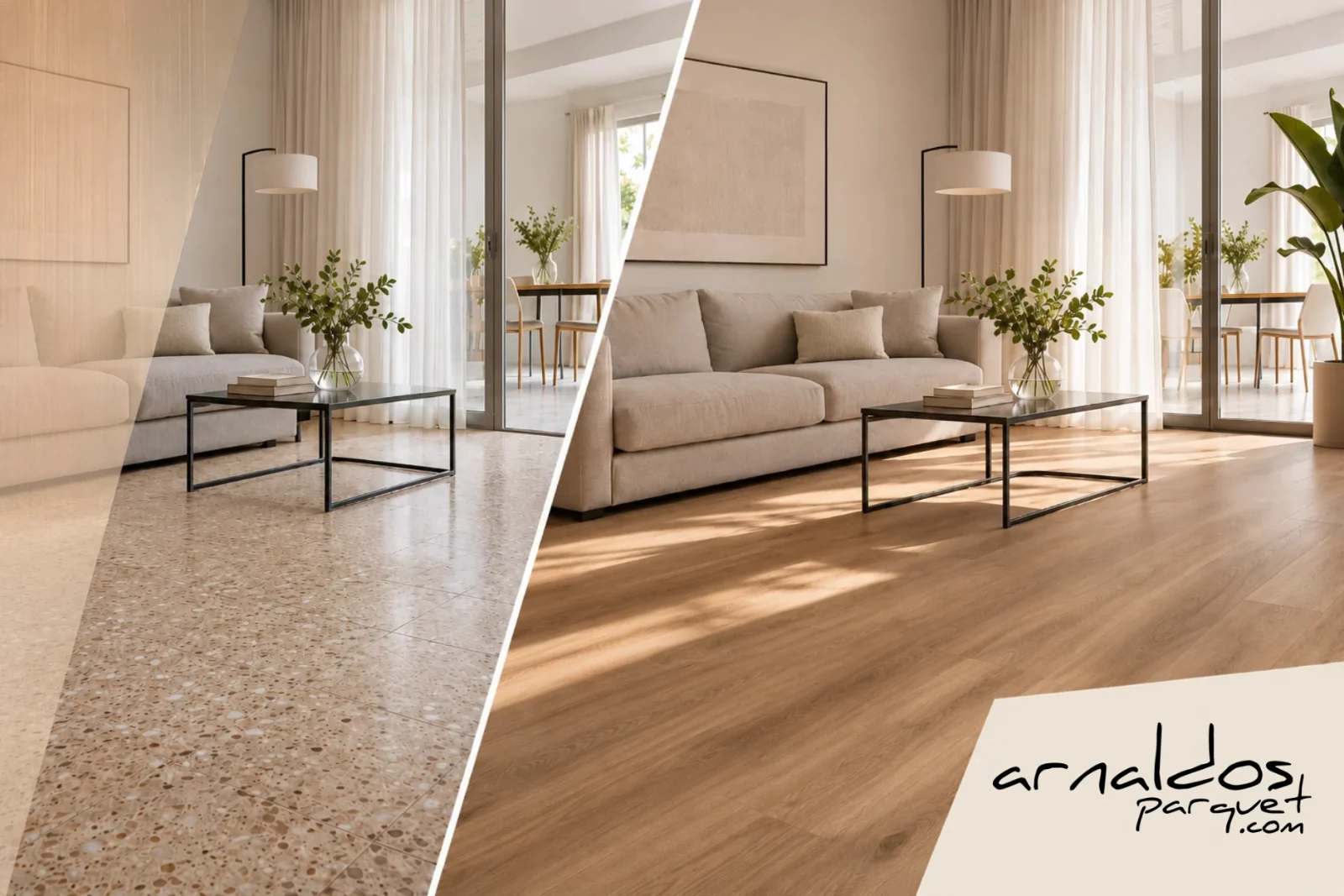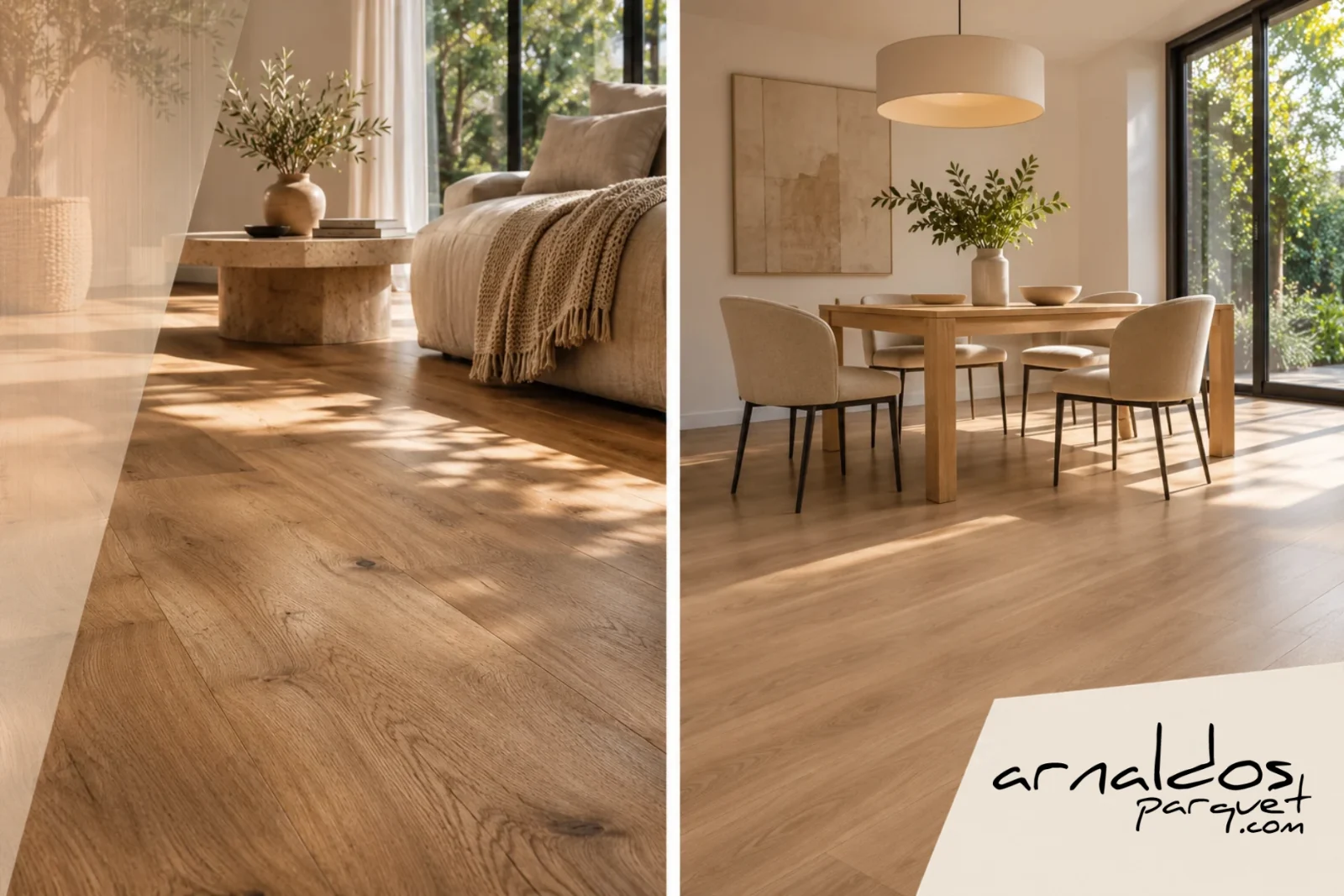
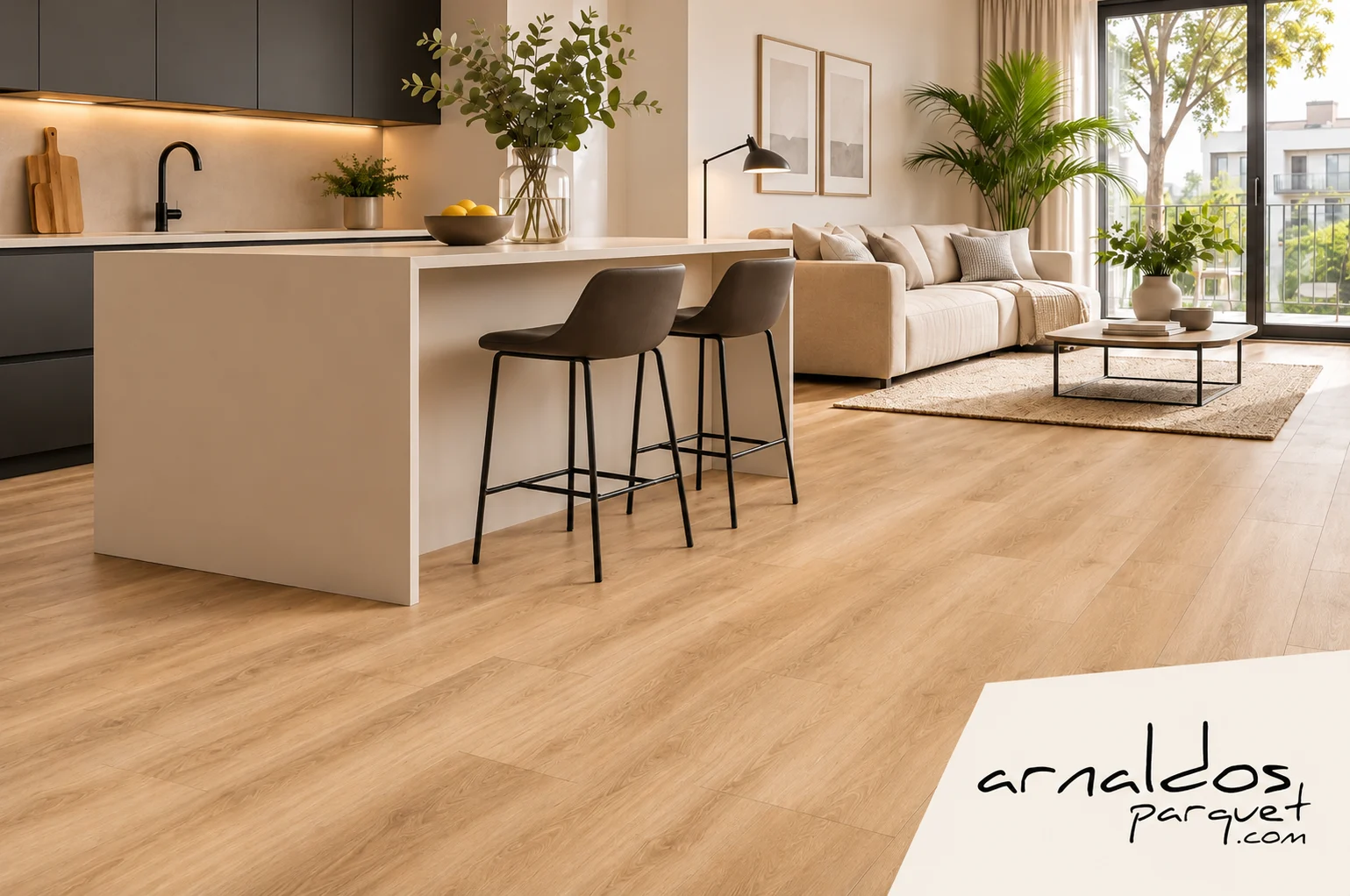
Vinyl flooring is a particularly practical choice when you need a surface that is easy to clean, suitable for busy everyday living and available in attractive wood- or stone-look finishes. It can work especially well in kitchens, hallways and renovation projects, provided the selected product and installation conditions are appropriate.
What exactly is vinyl flooring?
Vinyl flooring is a synthetic floor covering made from several layers. Its construction varies between products, and it is available in planks, tiles and other formats designed to replicate different natural materials.
One important distinction is between flexible vinyl and rigid vinyl flooring. The rigid category includes SPC, or Stone Plastic Composite, which uses a core combining mineral-based materials and polymers.
SPC is not simply another name for all vinyl flooring. It is a particular type of rigid vinyl floor. Its performance depends on the product construction, wear layer, locking system and manufacturer's specifications.
At Arnaldos Parquet, you can explore a selection of BDecora SPC vinyl floors featuring different finishes and technical characteristics.
Five situations where vinyl flooring can be especially practical
1. Kitchens where easy cleaning matters
Kitchens experience frequent foot traffic, food spills, splashes and regular cleaning. Vinyl flooring approved for kitchen use can provide an attractive surface that fits naturally into a practical daily cleaning routine.
It can also help create a consistent visual finish between the kitchen and adjacent living areas.
However, water resistance at plank level does not automatically make the complete floor installation waterproof. The joints, perimeter details and manufacturer's cleaning instructions still need careful consideration.
2. Busy homes with pets
In households with pets, moving furniture and frequent activity, a floor that is straightforward to maintain can be particularly useful.
Some vinyl products offer good resistance to everyday wear, although no floor should be assumed to be completely scratchproof. Sand, grit, furniture and pet claws can still affect its appearance.
Check the wear layer, surface protection and intended usage of each product. Choosing a suitable texture and finish can also make daily cleaning more manageable.
3. Renovations where removing the old floor is undesirable
Some vinyl installation systems can be fitted over suitable existing floor coverings. In certain renovation projects, this reduces the need to remove the original flooring.
However, the existing surface must meet the manufacturer's requirements for stability, moisture and flatness.
Loose tiles, uneven areas or deep grout lines may require preparation. Door clearances and transitions between rooms must also be checked before installation begins.
4. Interiors that benefit from visual continuity
Using the same flooring finish across multiple rooms can make a home feel more cohesive. Wood-look vinyl is particularly appealing when a warm, natural appearance is desired alongside relatively straightforward maintenance.
Before extending a single product across hallways, kitchens and bathrooms, confirm that it is approved for all the intended spaces. Expansion requirements, installation limits and room-specific instructions must also be respected.
5. Homes where low-maintenance flooring is a priority
Many vinyl floors can be maintained through regular sweeping or vacuuming and cleaning with suitable products.
Unlike certain natural wood floors, they do not require periodic sanding or refinishing as part of their normal maintenance.
Nevertheless, low maintenance does not mean maintenance-free. Remove abrasive dirt, protect furniture legs, avoid aggressive chemicals and follow the manufacturer's instructions for cleaning spills.
Is vinyl flooring suitable for bathrooms?
Some vinyl floors are suitable for domestic bathrooms, but this depends on the specific product and installation system.
A water-resistant or waterproof plank does not necessarily provide a fully waterproof floor assembly. Water may still reach the subfloor through unprotected joints or perimeter details.
Bathroom suitability should not be interpreted as approval for installation inside showers, saunas or other areas exposed to extreme moisture.
Always check the manufacturer's documentation and the required installation details before choosing vinyl flooring for a bathroom.
When vinyl flooring may not be the best option
Vinyl flooring is versatile, but there are circumstances where another solution may be preferable.
High temperatures and direct sunlight. Rooms with extensive glazing or significant temperature changes may require products with specific installation conditions.
Damaged or uneven subfloors. Vinyl flooring cannot compensate for an unstable, excessively damp or unsuitable base without the necessary preparation.
Future refinishing requirements. If the ability to sand and restore the floor is important, certain natural wood floors offer possibilities that vinyl flooring does not.
Underfloor heating. Compatibility depends on the individual product, heating system, temperature limits and overall thermal resistance of the installed floor.
Vinyl vs laminate flooring: which is more practical?
The answer depends on the room and the products being compared.
Vinyl flooring may be attractive where frequent cleaning and occasional water exposure are important considerations. Laminate flooring can also be a strong option, particularly when the selected product offers suitable wear resistance and moisture protection.
Neither material should be judged solely by its category. A useful comparison looks at two specific products, including their intended use, wear performance, installation requirements and maintenance instructions.
What to check before buying vinyl flooring
Start with the product construction, thickness and wear layer where specified. Then examine the installation system, water-resistance claims, subfloor requirements and compatibility with underfloor heating if relevant.
Consider the final installed height, transitions to other rooms and the manufacturer's maintenance recommendations.
For example, you can review the specifications of BDecora SPC Click Easy Natural and compare them with other products in the BDecora Easy collection.
A technically suitable floor can still perform poorly if installed in conditions that do not meet the manufacturer's requirements.
The most practical floor is the one that suits your space
Choosing flooring is not simply about selecting an attractive finish or a product advertised as durable. It is about matching the material to the actual conditions of the property and how the space will be used.
Arnaldos Parquet offers specialist flooring advice and a range of options for different needs. If you are comparing vinyl, laminate or natural wood, contact our team to discuss a suitable solution for your project.
Can vinyl flooring be installed in a kitchen?
Yes, provided the specific product is approved for kitchen use. Check its water resistance, cleaning instructions and installation requirements before choosing it.
Is vinyl flooring waterproof?
It depends on the product. Some vinyl floors are described as waterproof or water-resistant, but this does not automatically mean that the joints, perimeter and underlying structure are protected against water penetration.
Can vinyl flooring be installed over existing tiles?
It may be possible if the tiles form a stable, sufficiently flat and suitable base. Depending on the product and the condition of the floor, additional preparation or levelling may be necessary.
What is the difference between vinyl and SPC flooring?
Vinyl flooring is a broad category of synthetic floor coverings. SPC is a specific type of rigid vinyl flooring with a mineral-and-polymer composite core. Its performance depends on the individual product.